
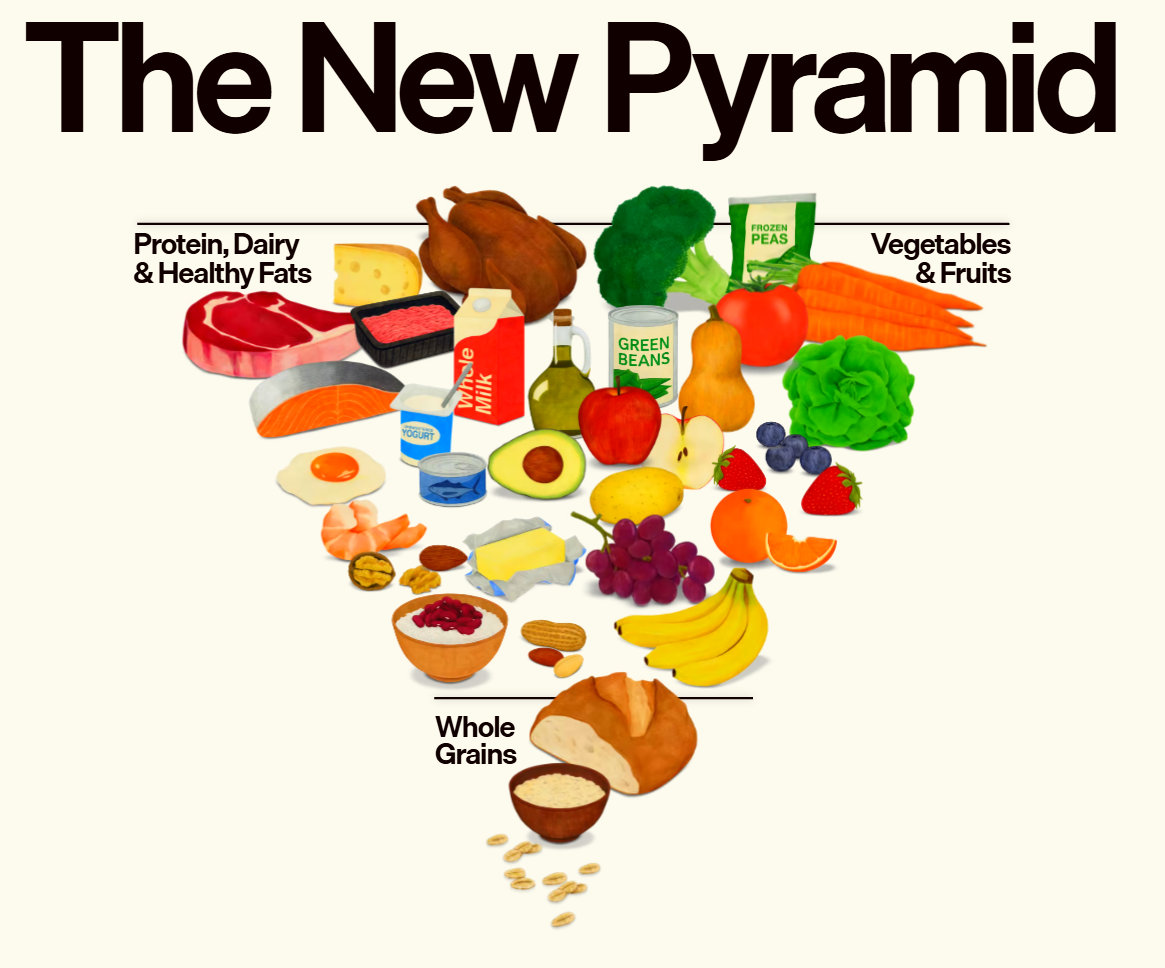
The newly released Dietary Guidelines for Americans, 2025–2030 mark a noticeable shift in the national conversation about food, and many holistic nutrition professionals may find the changes both encouraging and familiar.
While no federal guidance is ever perfect, this updated framework moves closer to principles long emphasized in holistic nutrition education: real food, nutrient density, and prevention over intervention.
At its core, the new guidance centers on whole, minimally processed foods, encouraging Americans to build meals around high-quality protein, healthy fats, fruits, vegetables, and whole grains, while significantly reducing reliance on highly processed foods and refined carbohydrates.
What’s Noteworthy for Holistic Practitioners?
Several updates align closely with the philosophies many of us already practice and teach:
- Protein is no longer sidelined. The guidelines emphasize the importance of high-quality, nutrient-dense protein at every meal, including both animal and plant sources.
- Highly processed foods are clearly discouraged. For the first time, the risks of packaged, ready-to-eat foods high in sugar, sodium, unhealthy fats, and additives are explicitly addressed.
- Added sugars are called out—especially for children. The guidance states that no amount of added sugar or non-nutritive sweeteners is recommended as part of a healthy diet, and that children under four should avoid added sugars entirely.
- Healthy fats are welcomed back. Whole-food fat sources such as eggs, seafood, full-fat dairy, nuts, seeds, olives, and avocados are encouraged, along with nutrient-dense oils like olive oil, butter, and beef tallow.
- Whole grains are prioritized over refined carbohydrates. Fiber-rich options are emphasized, while refined breads, crackers, and packaged grain products are recommended sparingly.
- Lower-carbohydrate approaches are acknowledged. The guidelines recognize that some individuals with chronic conditions may benefit from diets lower in carbohydrates, an important nod to personalized nutrition.
A Framework, Not a Prescription
Importantly, the guidelines are presented as a flexible, whole-food framework, meant to be adapted to individual needs, preferences, cultures, and budgets. Fresh, frozen, dried, and canned foods are all included as viable options, reinforcing accessibility without abandoning nutritional quality.
Because these guidelines inform school meals, military and veteran food programs, and other federal nutrition initiatives, this shift has the potential to influence food environments far beyond individual kitchens.
Moreover, it is our hope that a downstream effect of these new guidelines will be the potential for you, as a practitioner to help even more Americans reach their health goals. Many experts in the nutrition space have identified the need for an “army” of practitioners who can teach Americans how to eat healthy. YOU are that army!
A Step in the Right Direction
Holistic nutrition professionals have long advocated for preventing chronic disease by addressing food quality, metabolic health, and prevention at the root. While there is still work to be done, the 2025–2030 Dietary Guidelines represent meaningful progress toward those goals and reflect ideas that have been foundational in holistic nutrition for decades.
As always, our role remains critical: translating guidance into practical, and sustainable nutrition strategies that truly support health and vitality.
The full Dietary Guidelines for Americans, 2025–2030 are available at realfood.gov
Written by Laura Waldo, NANP Legislative Affairs Specialist